The attribution problem isn't technical
The promise of attribution is clear: understand which channels and touchpoints contributed to a conversion, so you can invest more in what works and less in what doesn't. That's a reasonable goal, and modern attribution tools do a credible job of answering it.
The issue is that this question, answered in isolation, produces decisions that optimize the wrong thing.
Channel performance data tells you what happened at the point of conversion. It doesn't tell you whether the strategy that led to that conversion was the right one – whether you were reaching the right people, whether your positioning was consistent with how you want to be perceived, or whether the goal that conversion served was actually connected to your broader growth targets.
Channel performance is real information. It's just incomplete information.
What attribution data can't see
Attribution models are built around the conversion event. What they can't capture is the strategic context that made the conversion possible – or worth having – in the first place.
Three layers are consistently outside attribution's scope:
Brand positioning. Whether your messaging resonates with the market isn't a channel question – it's a positioning question. Attribution shows you which channels converted; it doesn't tell you whether the story those channels were telling was coherent, differentiated, or aligned with how your brand actually wants to compete.
ICP and Personas. Understanding who you're trying to reach – in detail, across segments, mapped to real decision-making patterns – is strategic work that happens before campaigns are built. Attribution measures what happened after. Without a clear definition of your ideal customer profile and personas, high conversion numbers can mask the fact that you're attracting the wrong audience entirely.
Nested goals. Real growth strategies aren't flat. A brand awareness target feeds a demand generation target, which feeds a pipeline target, which feeds a revenue target. These are linked goals with dependencies between them. Attribution tools measure one conversion event at a time; they aren't designed to show how progress on one goal creates the conditions for progress on another.
The context attribution needs
None of this is an argument against attribution. Channel performance data is genuinely useful – it tells you which execution is working. The problem is treating it as a complete picture when it's one layer of a larger system.
The layer that's usually missing is the strategic one: a clear definition of who you're trying to reach, what position you're trying to hold in their minds, and how your goals connect to each other across the full growth architecture. When that context is explicit and structured, attribution data becomes significantly more actionable. You're no longer asking "which channel drove the conversion?" in a vacuum. You're asking whether that conversion served the right goal, reached the right person, and fits the strategic logic your team actually agreed on.
How cosmos™ provides that context
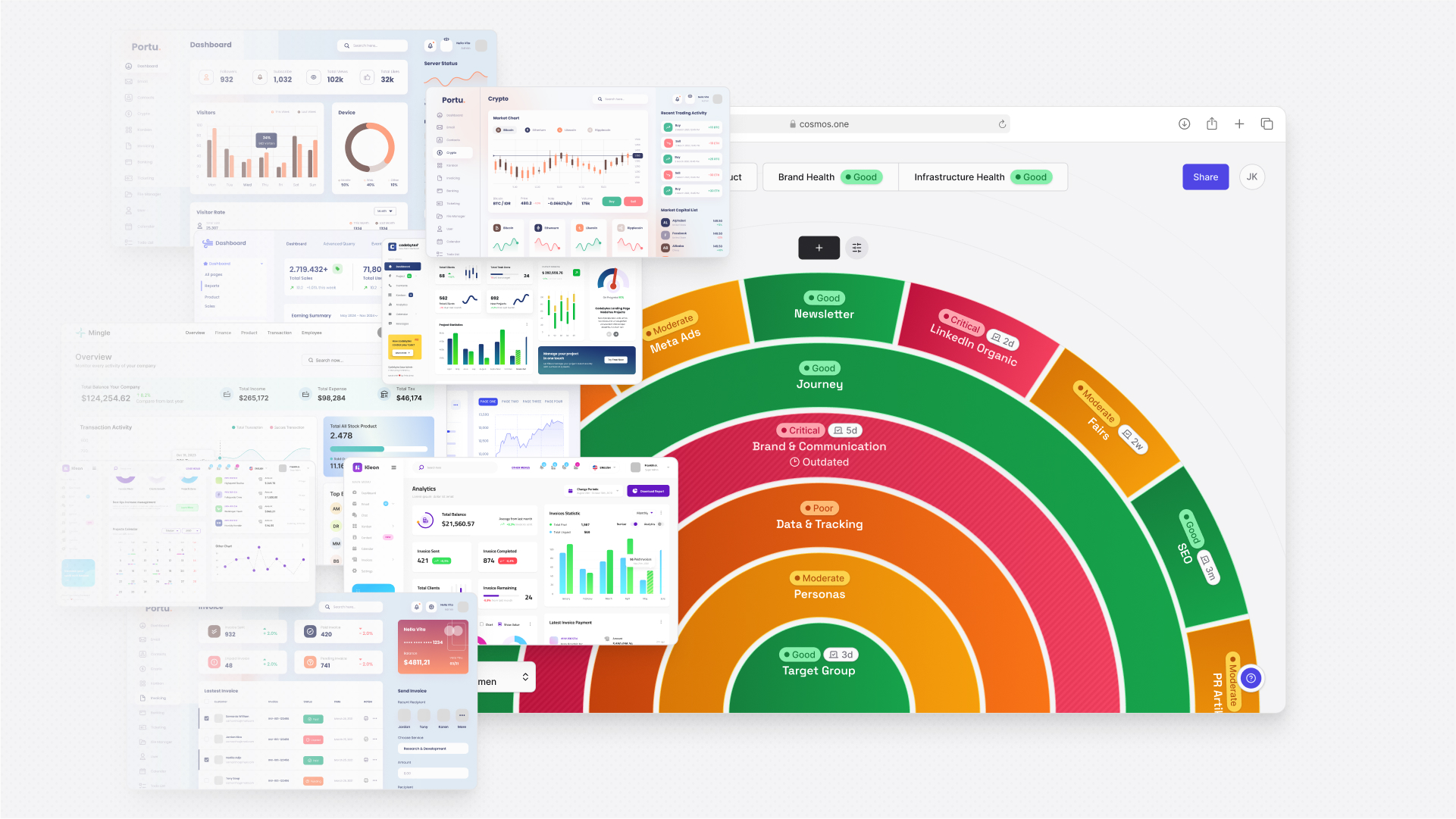
cosmos™ doesn't replace attribution tooling – it provides the strategic layer that makes attribution data meaningful. The Strategic Operating System connects Positioning, Personas, and ICP to the goal structure of each TargetLens™, so that every Impact Chain is built against a clear definition of who you're reaching and why.
Linked targets make nested goal structures explicit: a target in one TargetLens™ can be referenced inside the Impact Chain of another, so teams can see how upstream strategic efforts relate to downstream outcomes – a dimension that attribution software isn't built to show.
The result is a system where strategic intent and execution data can finally speak to each other. Attribution answers "what happened at the channel level." The Strategic Operating System answers "whether it happened inside a strategy that made sense."